Quick Summary: Pet waste removal demand is surging in 2026 as homeowners and property managers seek cleaner yards, odor control, and compliance with health and environmental regulations. Unmanaged dog waste poses public health risks by polluting waterways and spreading bacteria, prompting communities to install pet waste stations in high-traffic areas. Effective programs focus on strategic placement, regular maintenance, and community outreach to ensure proper waste disposal. Overall, the trend reflects a growing emphasis on hygiene, water quality, and reducing neighborhood complaints.
Pet Waste Removal is rising fast in 2026. Homeowners, HOAs, apartments, and pet-care sites want cleaner grounds and fewer complaints. EPA guidance keeps the risk clear: unmanaged waste can reach storm drains, pollute waterways, and spread bacteria. This guide covers why Pet Waste Removal is growing, who is buying Dog Waste Cleanup, and how Pet Waste Removal, Dog Poop Disposal, and service plans work in real properties.
Why Pet Waste Removal Is Surging in 2026
What is driving homeowner demand
Homeowners want cleaner yards, less smell, and one less chore each week. Health concerns matter too. The EPA says pet waste can wash into streams and lakes, spread bacteria, and add nutrients that fuel algae growth, which is why EPA guidance on pet waste management treats it as a real pollution issue. In 2026, seasonal mess is also pushing demand higher. A Boston Globe report on the post-snow cleanup rush showed local scoopers jumping from a few normal jobs to packed schedules in thaw periods.
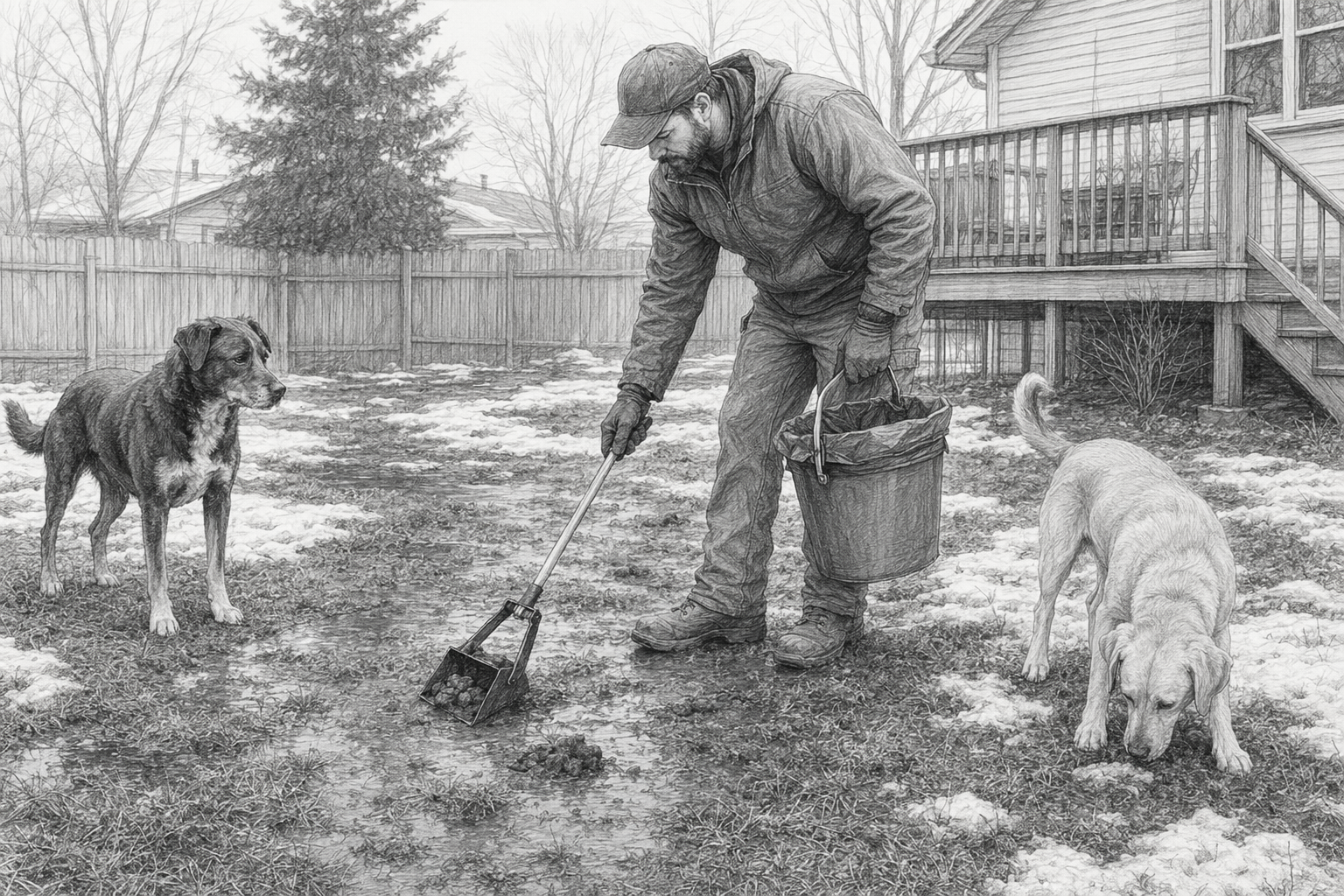
Busy families are not just buying convenience. They are buying a yard they can use again.
Why property managers are paying attention
Property managers care because dog waste turns into complaints fast. It affects curb appeal, tenant trust, and shared-space safety. Cities are also putting more pressure on cleanup. In New York City, owners and walkers can face fines, and property owners must keep nearby public areas clean. That makes routine service easier to justify than reactive cleanup.
Why Unmanaged Dog Waste Is a Public-Health Issue
Dog waste is not just gross. It can carry pathogens and wash into storm drains, streams, and lakes. The EPA says stormwater can pick up pet waste and move it straight to nearby waters, where it can make people and animals sick and add bacteria and nutrients EPA pet waste guidance.
How pet waste reaches waterways
Rain is the main trigger. Waste left on lawns, sidewalks, and near curbs gets swept into gutters and storm drains. Those drains usually move water fast, not treat it. Research also shows dog feces may contain organisms and drug-resistant bacteria that raise health concerns in public spaces public health study.
What residents should do instead
- Pick it up right away
- Bag it securely
- Put it in the trash if local rules allow
- Keep waste away from curbs, ditches, and drains.
- Do not leave it to “break down.”
- Use a pro service if cleanup gets missed often.
Fast pickup protects yards, shoes, pets, and water quality at the same time.
How Pet Waste Stations Are Changing Communities
Where stations work best
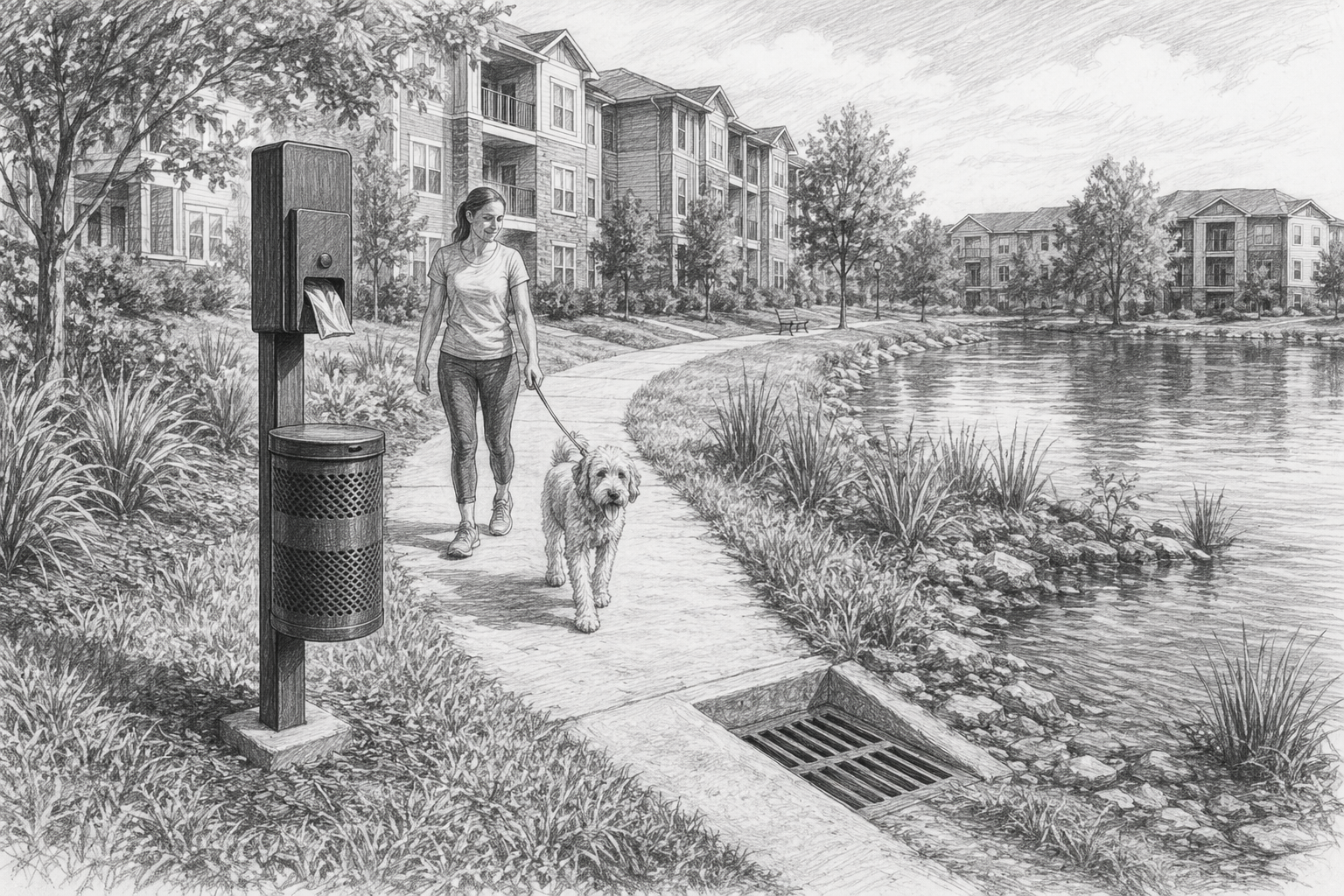
Pet waste stations work best where dog traffic stays steady and runoff risk is high. The EPA says stormwater can carry waste into streams and lakes, so stations matter most near trails, parks, shared greens, apartment lawns, and paths by drains or ponds EPA guidance. Bluffton, South Carolina uses stations near waterbodies, storm drains, and pet activity hotspots for that reason Bluffton program.
- Dog parks
- HOA common areas
- Multi-family communities
- Greenways and trailheads
Stations help most where people already walk dogs, not where use is rare.
What makes a station successful
A station only works if people can spot it, trust it, and use it fast.
- Put it on the natural walking route.
- Keep bags stocked.
- Empty bins on schedule.
- Add short signs with a plain health message.
Montgomery County says its HOA program paired stations with outreach and maintenance, collecting about 68,000 pounds of waste since 2014. That is the model communities should copy.
What Homeowners and Property Owners Should Know Before They Buy
Best fit starts with your property, not the cheapest quote. Pick a plan that matches dog count, yard size, foot traffic, and who uses the space. The CDC says dog poop can carry germs, so cleanup matters even in your own yard, especially where kids play CDC guidance.
- Small homes, 1-2 dogs: Weekly service usually works.
- Large yards or 3+ dogs: Twice-weekly visits help control smell and buildup.
- HOAs, rentals, and retail sites: Choose crews with clear route timing and photo proof.
- Boarding or high-use dog runs: Ask about custom frequency and waste station checks.
Pet waste left on the ground can wash into storm drains and waterways, according to EPA pet waste guidance.
Want a cleaner, safer yard without the chore? Book weekly or one-time service with Circle City Scoopers today.
Frequently Asked Questions
Q1: What are the latest trends and projections in pet waste removal in 2026?
Demand keeps rising. Homeowners want weekly service, odor control, and cleaner shared spaces. Property managers want simple contracts and waste station support. Growth looks strong in suburbs with more dogs, stricter cleanliness rules, and higher interest in hands-off yard care.
Q2: How do pet waste stations improve public health and safety in communities?
They cut exposure to germs, reduce runoff risk, and keep walkways cleaner. Stations also make pickup easier, so more people comply. That means fewer smells, fewer complaints, and safer common areas for kids, pets, staff, and visitors.
Q3: What are effective strategies for implementing pet waste stations in residential areas?
Place stations near entrances, dog-walking paths, and shared green space. Keep bag refills and pickup schedules consistent. Add clear signs and assign service checks. For HOAs or multifamily sites, pair stations with routine cleanup from a local provider like Circle City Scoopers.
Conclusion
Pet waste removal is growing because owners want cleaner yards, less odor, and fewer complaints. Public health matters too – the EPA says pet waste pollutes waterways, while New York’s 2026 SCOOP Act push shows pressure is rising.