Quick Summary: Hiring professional pet waste removal generally saves busy owners more time than doing it themselves, especially in larger or high-traffic areas. DIY cleanup takes small chunks of time each day, which adds up quickly, while pros work faster with trained routines. For small yards with few pets, DIY can work if done daily, but for most others, outsourcing reduces hassle and frees up time.
For most busy dog owners, hiring pet waste removal saves more total time than doing it yourself. That gap gets much wider on commercial sites and boarding facilities, where mess builds up fast. We have reviewed cleanup workflows across homes and high-use properties, and this comparison shows where DIY time slips away, how service changes the routine, and which choice saves more time in real life.
Pet Waste Removal vs DIY Cleanup: Time Factors at a Glance
| Professional pet waste removal | DIY cleanup | |
|---|---|---|
| Time required per visit | Low owner time; service handles the cleanup | Owner or staff time every cleanup |
| Scheduling effort | One-time setup, then recurring visits | No booking, but repeated personal labor |
| Missed-spot risk | Lower with trained, systematic route checks | Higher when cleanup is rushed or irregular |
| Waste disposal effort | Handled by the provider or built into service | Owner or staff must bag and discard it |
| Best for | Busy homes, commercial properties, boarding facilities | Very small yards or low-waste situations |
| Overall time savings | High, especially on recurring schedules | Lower unless cleanup is extremely occasional |
How Professional pet waste removal and DIY cleanup Compare
Professional pet waste removal
This is a scheduled service for homes, shared spaces, and commercial grounds that want cleanup handled for them. It fits busy owners and managers who care most about saved time, fewer missed spots, and simpler disposal. The EPA notes pet waste should be cleaned up and disposed of properly to protect water quality in its guidance.
DIY cleanup
DIY cleanup means the owner or on-site staff picks up waste as needed. It works best for very small yards, low-waste homes, or people who do not mind repeated hands-on work. The tradeoff is simple: no booking, but every visit still takes your time, plus bagging and trash duty.
Where the Time Actually Goes
DIY cleanup eats time in small chunks. You walk the yard, find each pile, bag it, toss it, clean tools, then wash up. The CDC says dog poop can carry germs, so cleanup does not end at the scoop and bag CDC guidance. Those extra minutes feel minor, but over a week they stack up fast, especially after rain or missed days.
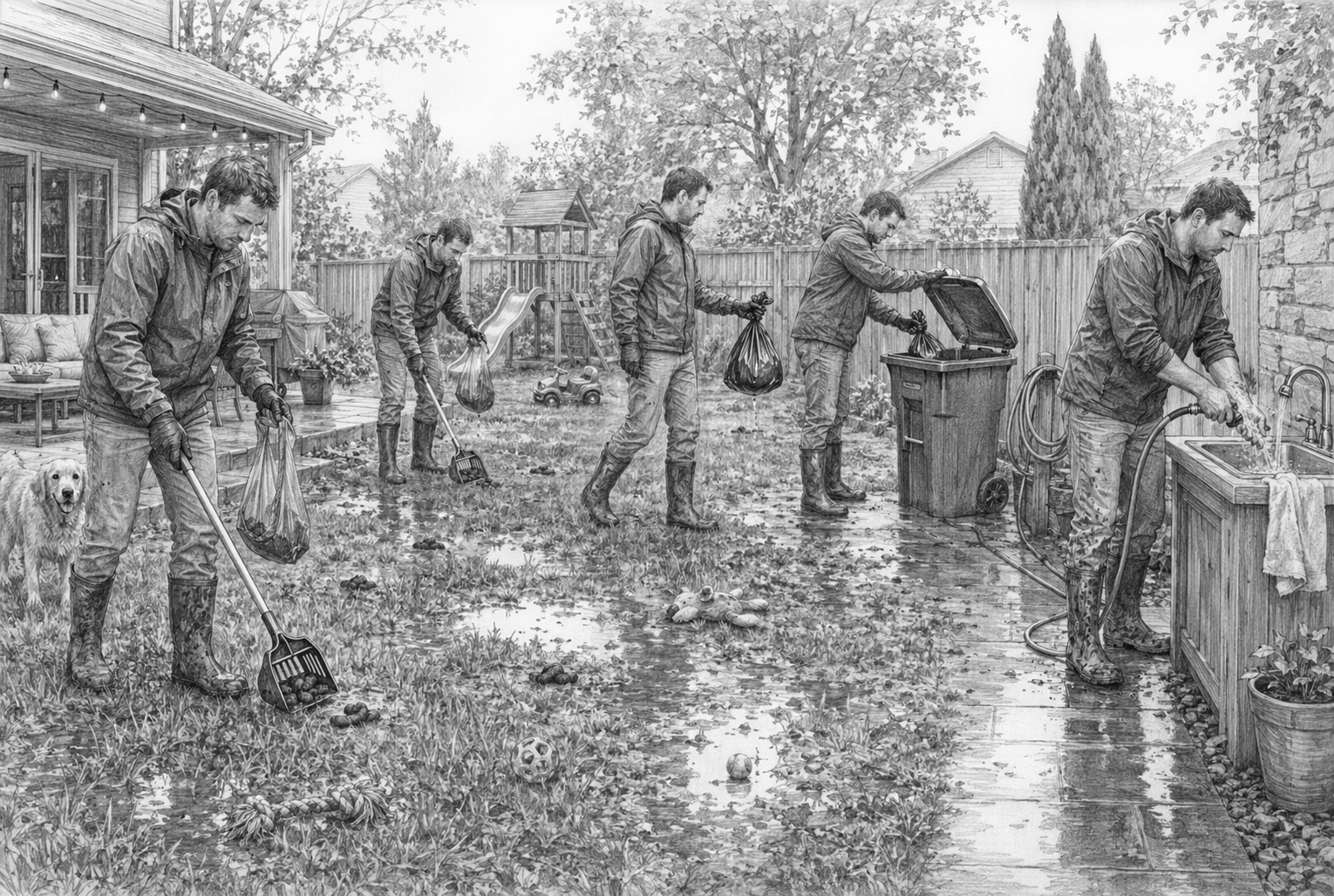
Service gets faster as yard use goes up. In multi-dog homes, rentals, and commercial dog areas, waste spreads across more ground and builds up quicker. The EPA notes pet waste left on the ground can wash into streams and create bacteria pollution EPA pet waste fact sheet. A trained crew moves in a set route, brings supplies, and clears the area in one pass.
Which Option Saves More Time for Different Property Types?
For most small homes with one or two dogs, DIY can work if you scoop daily. Skip a few days, and time stacks fast. The EPA notes pet waste left on the ground can wash into storm drains, so delays add both mess and risk EPA guidance.
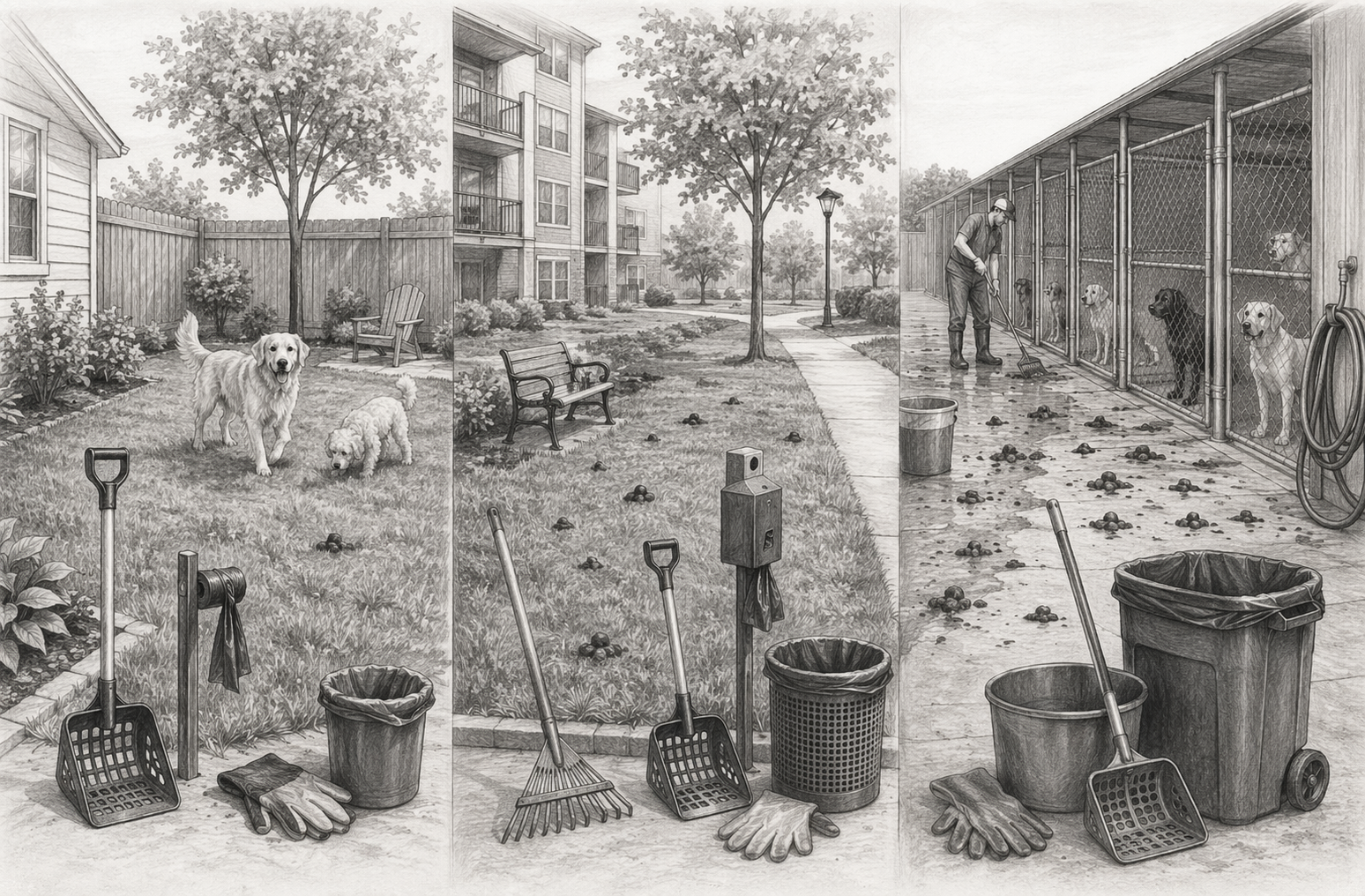
For commercial properties and shared spaces, pro service usually saves more time. Staff cleanup means scheduling, checks, supply restocking, and complaint follow-up. Public areas also need steady waste control because pet waste contributes to bacteria pollution in urban runoff EPA source water bulletin.
For dog boarding sites and high-traffic facilities, outsourcing saves the most time. Waste shows up all day, not once a week. Teams need repeat passes, odor control, and fast response, so DIY pulls staff away from customer care and animal handling.
Why Professional Cleanup Often Feels Faster Than DIY
Pros save time because they cut the small delays that stretch a simple chore. You do not have to find bags, gloves, or remember the yard later. Missed waste also does not pile up into a bigger job, which the EPA says can become a real management problem.
Handling does not end at the scoop. You still bag it, carry it, and dispose of it safely. That last part matters because EPA guidance notes pet waste can carry pathogens and should be properly disposed of. > Less touching, less transport, less cleanup after cleanup.
Which Should You Choose for the Fastest Week?
DIY is still practical if you have one dog, a small yard, and a fixed routine. If you already walk the yard daily, cleanup stays short. EPA says pet waste should still be picked up at home and disposed of properly.
Professional service is the clear time-saver if you have multiple dogs, a larger lot, rentals, or missed weeks. Once waste piles up, catch-up takes longer, and the EPA notes unmanaged pet waste creates real public health and water pollution problems in yards and communities.
Save your weekends and skip repeat yard checks. Book weekly or one-time service with Circle City Scoopers for a cleaner yard, less hassle, and more free time.
Frequently Asked Questions
Q1: What are the time-saving benefits of professional pet waste removal compared to DIY cleanup?
Pros save pickup, bagging, disposal, and repeat yard scans. Weekly service also cuts missed spots and cleanup catch-up time after rain or busy weeks.
Q2: How does regular pet waste removal improve backyard health and reduce odor?
Frequent removal lowers smell, fly activity, and dirty foot traffic. It also helps protect grass and reduces germ buildup where kids and pets play.
Q3: Is professional pet waste removal worth the cost for busy pet owners in North Carolina?
For many owners, yes. If your schedule is tight, the saved time, cleaner yard, and fewer skipped cleanups often beat the monthly service cost.
Conclusion
DIY can work for one dog and a small yard. For most busy owners, service saves more time, and CDC guidance supports fast cleanup to reduce health risk.